Future of AI Tools: Trends and Innovations to Watch in 2026

Artificial Intelligence is evolving at an extraordinary pace. What began as simple automation and machine learning systems has now become a powerful ecosystem of intelligent tools capable of writing content, generating images, analyzing data, coding software, automating workflows, and even making business decisions.
As we move through 2026, AI tools are becoming more sophisticated, accessible, and integrated into everyday life. Businesses, students, developers, marketers, creators, and professionals are increasingly relying on AI to improve productivity and gain competitive advantages.
This article explores the most important AI trends and innovations shaping the future of AI tools in 2026 and beyond.
Why AI Tools Are Growing So Fast
The rapid growth of AI tools is driven by advances in machine learning, cloud computing, large language models, and increasing demand for automation. Organizations are looking for ways to improve efficiency while reducing operational costs.
- Increasing computing power
- Advanced AI models
- Growing business adoption
- Improved accessibility
- Automation demand
- Data-driven decision making
- Faster software development
1. Rise of AI Agents
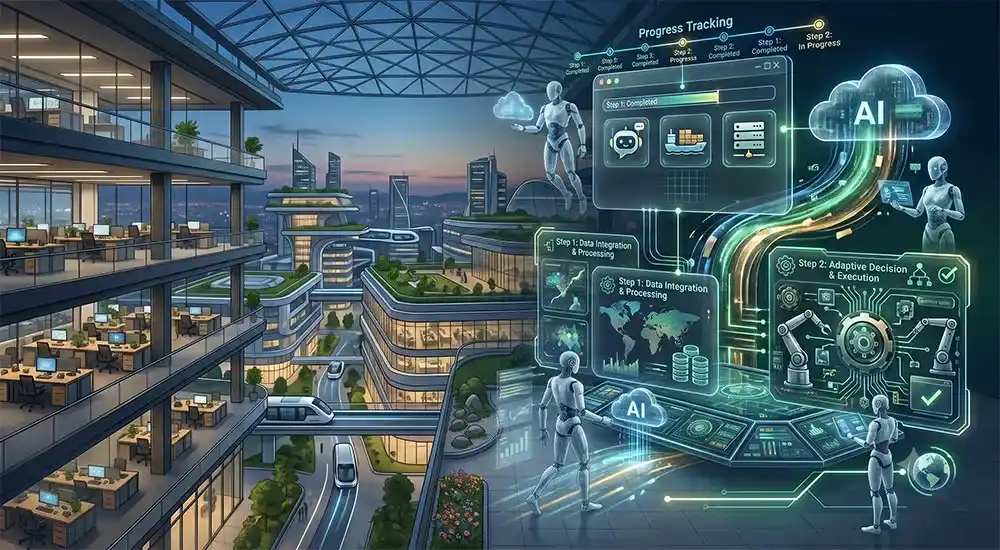
One of the biggest AI innovations in 2026 is the emergence of AI agents. Unlike traditional AI assistants that respond to commands, AI agents can independently perform tasks, plan actions, and achieve goals.
Capabilities of AI Agents
- Autonomous task execution
- Research and analysis
- Workflow automation
- Customer support management
- Project coordination
Future Impact: AI agents may become virtual employees capable of handling complex business operations.
2. Multimodal AI Systems
Modern AI tools are no longer limited to text. Multimodal AI can understand and generate text, images, audio, video, and code simultaneously.
- Text-to-image generation
- Image-to-text understanding
- Video creation
- Voice interaction
- Cross-media content generation
This advancement enables more natural communication between humans and machines.
3. Hyper-Personalized AI Assistants
Future AI assistants will learn user preferences, work habits, goals, and communication styles to provide highly personalized experiences.
Potential Features
- Personal scheduling
- Email management
- Task prioritization
- Financial planning
- Learning assistance
- Health recommendations
These intelligent assistants will become increasingly capable of acting as personal productivity partners.
4. AI-Powered Content Creation
Content creation is one of the fastest-growing AI applications. AI writing tools, image generators, and video creation platforms are helping creators produce high-quality content faster than ever.
Future Content Trends
- Automated blog writing
- AI-generated videos
- Realistic voice synthesis
- Interactive content creation
- AI-powered storytelling
Businesses and creators will continue using AI to scale content production efficiently.
5. AI in Healthcare Innovation
Healthcare is expected to experience some of the most significant AI-driven transformations over the coming years.
AI Healthcare Applications
- Disease prediction
- Medical imaging analysis
- Drug discovery
- Virtual health assistants
- Personalized treatment planning
AI tools are helping doctors make faster and more accurate decisions while improving patient outcomes.
6. AI in Education
Education is becoming more personalized through AI-powered learning platforms.
- Adaptive learning systems
- Virtual tutors
- Automated assessments
- Language translation
- Personalized study plans
Students can receive customized educational experiences tailored to their individual learning styles.
7. Advanced AI Coding Tools
AI coding assistants are becoming increasingly sophisticated, helping developers write, debug, and optimize software more efficiently.
Future Coding Features
- Automatic code generation
- Bug detection
- Code optimization
- Software architecture suggestions
- Automated testing
Developers are expected to become more productive as AI handles routine programming tasks.
8. AI-Powered Business Intelligence
Organizations are increasingly using AI to analyze data and generate actionable insights.
- Predictive analytics
- Sales forecasting
- Market trend analysis
- Customer behavior insights
- Risk management
AI-driven business intelligence enables companies to make faster and more informed decisions.
9. AI Automation Across Industries
Automation remains one of the most valuable applications of AI.
Industries Benefiting from Automation
- Manufacturing
- Finance
- Healthcare
- Retail
- Customer support
- Logistics
Businesses are automating repetitive tasks to improve efficiency and reduce costs.
10. Responsible and Ethical AI
As AI adoption grows, concerns about privacy, transparency, bias, and security are becoming increasingly important.
Future Ethical Priorities
- Data privacy protection
- Transparent AI systems
- Bias reduction
- AI governance frameworks
- Responsible deployment
Governments and organizations are developing regulations to ensure ethical AI development.
AI Trends Comparison Table
| Trend | Main Benefit | Expected Impact |
|---|---|---|
| AI Agents | Automation | Very High |
| Multimodal AI | Better Interaction | Very High |
| AI Assistants | Productivity | High |
| AI Content Creation | Efficiency | High |
| Healthcare AI | Patient Outcomes | Very High |
| Education AI | Personalized Learning | High |
| Coding AI | Development Speed | High |
| Business Intelligence | Decision Making | Very High |
| Automation | Cost Reduction | Very High |
| Ethical AI | Trust & Compliance | High |
Challenges Facing Future AI Development
Despite impressive advancements, AI still faces several challenges.
- Privacy concerns
- Cybersecurity risks
- High infrastructure costs
- Regulatory uncertainty
- Data quality issues
- Bias in AI models
- Workforce adaptation
Addressing these challenges will be critical for sustainable AI growth.
Industries Most Likely to Be Transformed
- Healthcare
- Education
- Finance
- Marketing
- Software Development
- Manufacturing
- Transportation
- E-commerce
- Customer Service
- Media & Entertainment
What Businesses Should Do Now
Organizations preparing for the future of AI should focus on developing AI strategies, training employees, and investing in responsible implementation.
- Adopt AI gradually
- Train teams on AI technologies
- Focus on automation opportunities
- Protect data privacy
- Monitor AI performance
- Stay informed about regulations
Final Thoughts
The future of AI tools in 2026 is incredibly exciting. From autonomous AI agents and multimodal systems to intelligent assistants and advanced business automation, artificial intelligence is becoming deeply integrated into every aspect of modern life.
Organizations and individuals who embrace these innovations responsibly will be better positioned to increase productivity, improve decision-making, and remain competitive in an increasingly AI-driven world.
While challenges remain, the opportunities created by AI tools are likely to reshape industries, transform careers, and redefine how people interact with technology for years to come.
Frequently Asked Questions (FAQs)
What is the future of AI tools?
The future of AI tools includes autonomous agents, multimodal systems, advanced automation, personalized assistants, and industry-specific AI solutions.
Will AI tools replace human workers?
AI will automate repetitive tasks, but human creativity, leadership, and strategic thinking will remain essential.
Which industries will benefit most from AI?
Healthcare, education, finance, marketing, software development, manufacturing, and customer service are expected to benefit significantly.
What are AI agents?
AI agents are intelligent systems capable of performing tasks autonomously while planning actions and making decisions with minimal human input.







Comments (0)